Helping little hearts handle big feelings
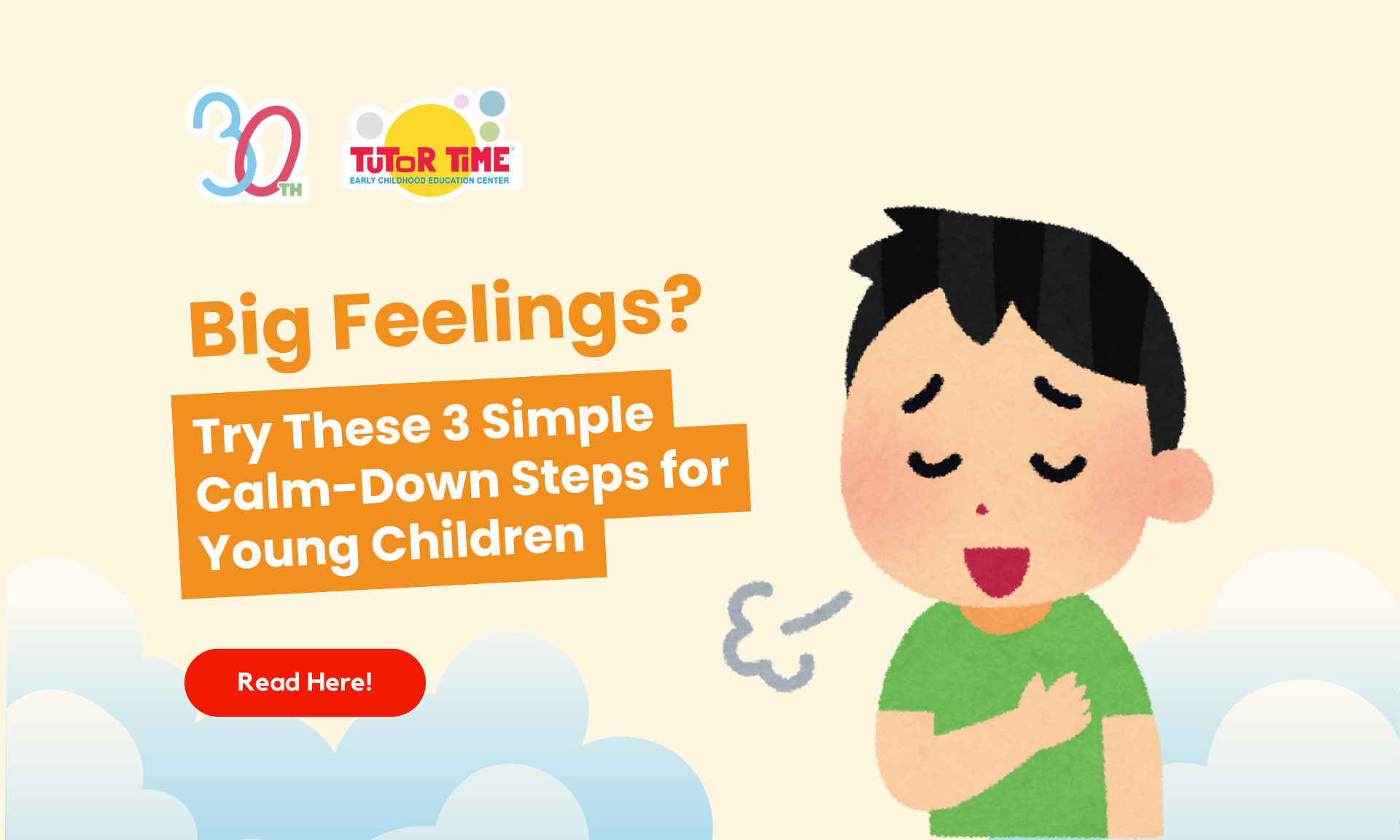
Big feelings are a normal part of childhood. Frustration when a toy is taken, disappointment when a tower falls, or anger when things don’t go their way—these moments are actually opportunities for children to learn an important life skill: how to calm themselves down.
Calm-down strategies help children develop self-regulation, the ability to manage emotions and behavior. Children who learn these skills early are better able to focus, build friendships, and handle frustration in healthy ways.
Parents can try this research-based routine inspired by Second Step®. It’s a Social-Emotional Learning program used in many schools to help children understand feelings, manage emotions, and build positive relationships.The routine introduces three simple steps that help children calm down when emotions feel overwhelming. The best part? The steps are easy for young children to remember and practice. With a little guidance, parents and children can practice together at home.
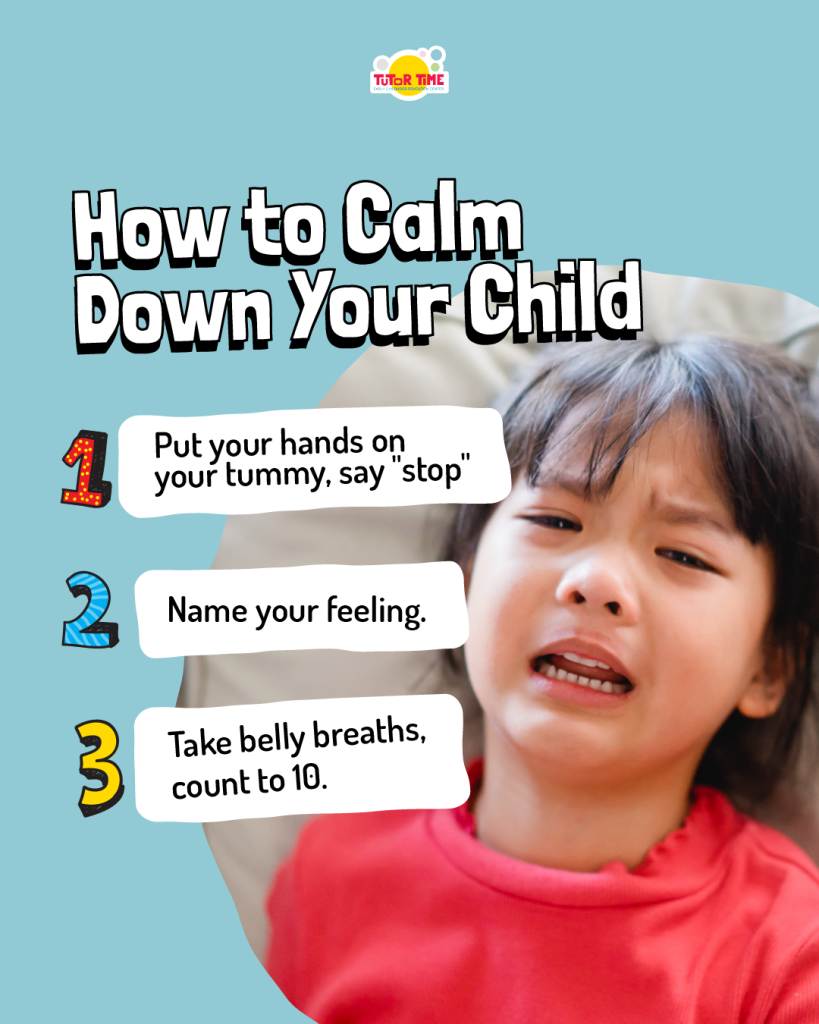
1. Hands on Tummy, Say “Stop”
When children begin to feel strong emotions, the first step is to pause.
Placing their hands on their tummy and saying “stop” gives them a physical and verbal signal to slow down. This small moment of pause helps interrupt impulsive reactions like yelling, grabbing, or pushing.
2. Name the Feeling
Next, encourage children to name what they are feeling.
“I feel angry.”
“I feel frustrated.”
“I feel sad.”
Naming emotions helps children understand what is happening inside their bodies. Research in social-emotional learning shows that when children can identify their feelings, they are better able to manage them in healthy ways.
3. Take Belly Breaths and Count to 10
The final step is to calm the body.
Children are taught belly breathing, a slow breathing technique where the tummy expands when breathing in and relaxes when breathing out. This type of breathing helps slow the heart rate and create a sense of calm.
Encourage children to:
- Take a slow breath in through the nose
- Feel their tummy move out
- Breathe out slowly
- Count to ten while breathing
Within just a few breaths, the body begins to relax—and children are better able to think about what to do next.
Practicing Calm-Down Skills at Home
Like any skill, calming down takes practice. The best time to practice is actually when children are already calm, not during a meltdown.
Parents can help by:
- Practicing belly breathing together
- Talking about feelings during story time or daily conversations
- Modeling calm behavior when adults feel frustrated
- Gently reminding children of the steps when emotions start to rise
You might say:
“I see you’re feeling upset. Let’s try our calm-down steps together.”
Over time, children begin to use these strategies on their own.
Growing Strong Hearts and Minds
Learning to calm down doesn’t mean children won’t feel big emotions. Instead, it gives them the tools to handle those feelings safely and confidently.
And when children learn to pause, name their feelings, and breathe through tough moments, they’re not just calming down—they’re building lifelong skills in self-regulation, empathy, and resilience.
Recommended Reading for Parents:
written by Shandy Lwieka,
Tutor Time Indonesia